

For many people, pollen in the spring is primarily associated with allergies. However, for scientists, it raises a broader question: as it drifts through the city’s air, can it bind to pollutants and contribute to additional health problems? A high-performance liquid chromatography (UHPLC) system installed at the VU Šiauliai Academy will help answer this question.
New equipment will pave the way for innovative research
Ingrida Šaulienė, a professor at the VU Šiauliai Academy, says that this system is necessary to continue the long-standing line of research in aerobiology. Until now, scientists have focused heavily on pollen monitoring, its effects on people with allergies, and real-time forecasting solutions. The UHPLC system marks a new phase—it will enable the analysis of pollen’s chemical composition and its links to environmental pollution.
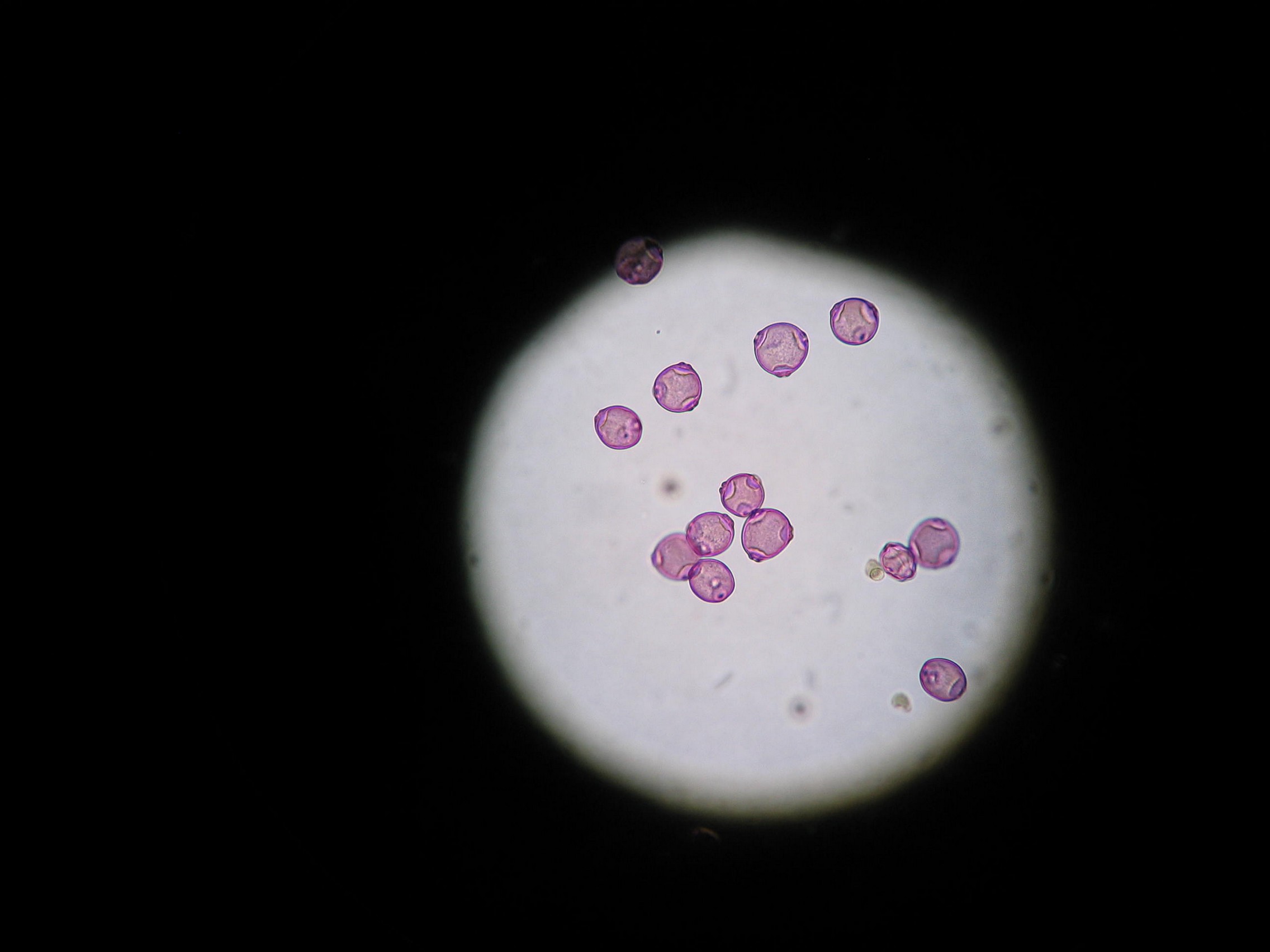
“It is possible that pollen does not just float in the air, but it is likely that as it floats, it collects surrounding substances. We know that pollen grains are sticky and have a rough, uneven surface, so it is likely that chemical compounds can easily attach themselves to them. We want to find out whether substances harmful to the human body—carcinogens—can also attach to pollen. These are compounds that the World Health Organization has included on its list of cancer-causing substances,” reveals Prof. Dr. Ingrida Šaulienė.
As the scientist notes, this is currently only a hypothesis, which can be confirmed once the UHPLC system is put into use. The research will help determine whether pollen actually binds to such compounds, in what quantities, and under what environmental conditions. This is important for understanding how particles of biological origin interact with urban air pollution.
“The UHPLC system will allow us to very sensitively determine the concentrations of the chemical compounds under investigation, so we will primarily use the device to reveal whether pollen binds toxins and to determine exactly which substances and in what quantities pollen carries,” the professor asserts.
Conducting research with the new UHPLC system will require a significant amount of preparatory work—including the specialized collection of samples and their preparation for use in the laboratory. Scientists will collect air samples using special pumps and will also employ unmanned aerial vehicles, which will allow them to study pollen at different altitudes. These samples will help determine whether the concentration of chemical compounds “carried” by pollen differs between the ground and higher atmospheric layers. The collected samples will be processed in the laboratory so that the UHPLC system can detect even very low concentrations of the chemicals being studied. This is particularly important when assessing the everyday urban environment, where people are exposed not to a single isolated factor, but to a combination of various biological and chemical particles.
The Benefits of Research for Society
New laboratory equipment will help scientists better understand what substances pollen carries. The information obtained will be useful not only in finding solutions related to human health, but also in planning urban green spaces.
“We always strive to ensure that scientific results serve the public. That is why we want to gain new knowledge that would help urban greening specialists, architects, and everyone who plans and designs urban parks or cares for green spaces. Greenery is essential for cities, but it is not enough to simply plant more plants—it is important to know which plants, in which locations, and under what conditions are most beneficial to human health. If studies show that the pollen of certain plants more frequently binds to compounds harmful to health, this information could help in planning parks, squares, and other green spaces more responsibly. Such information could become an additional criterion in the future when selecting plant species for urban spaces. This does not mean that there should be less greenery in cities. On the contrary—research can help create more high-quality greenery that is beneficial to human health. No such studies have been conducted to date, so this is a complete novelty,” says Ingrida Šaulienė.
The researcher notes that pollen grains are small and cannot carry particularly large amounts of harmful substances, but it is precisely these pollen grains that easily enter our respiratory tracts; they are found not only outdoors but also indoors, as people ventilate rooms and bring them in on their clothes from outside. And harmful substances travel along with it, so knowing which plants to avoid in urban areas can help reduce toxins in our living environment.
These studies are part of a broader aerobiology research program at the Vilnius University Šiauliai Academy. Scientists are developing and implementing real-time bioaerosol monitoring solutions, advancing the PASYFO allergy risk prediction system, and collaborating with international partners. The new UHPLC-MS system will allow these efforts to be supplemented with chemical analysis data—meaning that in the future, it will be possible to more accurately assess not only pollen levels but also their potential interaction with air pollution.
In the long term, such research can contribute to a healthier urban environment: helping to formulate science-based recommendations for municipalities, plan green spaces, inform the public, and reduce the risks posed by environmental factors to sensitive population groups.
The latest-generation UHPLC system for advanced studies of bioaerosol chemical composition and pollen allergens (REGREEN) (No. 10-093-K-0041) is funded by the European Union’s NextGeneration EU. The total project value is just over 372,000 euros.